
 ekane
ekane

It was supposed to be a fortnight of rest and reassessment. A chance for Mikel Arteta to breathe, regroup, and prepare his Arsenal side for the most consequential stretch of their season. Instead, the international break has delivered something closer to a medical emergency, with injury news arriving at the Emirates so frequently that keeping count has become a grim sport in itself.
Twelve players. That is where the tally now stands, following Martin Zubimendi’s withdrawal from the Spanish national squad after experiencing discomfort in his right knee. The midfielder, who only managed 13 minutes of Spain’s friendly against Serbia on Friday, has been sent home as a precautionary measure, with the Royal Spanish Football Federation confirming that Arsenal’s medical staff have been duly informed. His return date, like so many others on this ever-expanding list, remains unknown.
It is the kind of update that makes you wince on behalf of the club. Zubimendi is the tenth Arsenal player to leave an international camp during this break alone, and the sheer accumulation of setbacks has moved well beyond bad luck into something that genuinely threatens Arteta’s title ambitions.
A cascade nobody saw coming
The problems began building before the break had even properly started. Bukayo Saka and Declan Rice, both nursed carefully into Thomas Tuchel’s England squad, were sent back to Arsenal almost as soon as they arrived. Neither featured in England’s first fixture, and now both will miss the friendly against Japan. The severity of their respective issues has not been confirmed, which is perhaps the most unsettling part of all.
Then came Noni Madueke. The winger, who had already missed 15 games earlier this season with a knee problem, was substituted during England’s draw with Uruguay and left the stadium in a knee brace, visibly distressed as he passed Tuchel on the touchline. He has since been described as having a knock, though the footage told a rather more worrying story. Tuchel, to his credit, was careful not to overclaim on the extent of the injuries swirling through his camp. “Not everyone is fully fit as I understood,” he admitted. “We will take late decisions.”

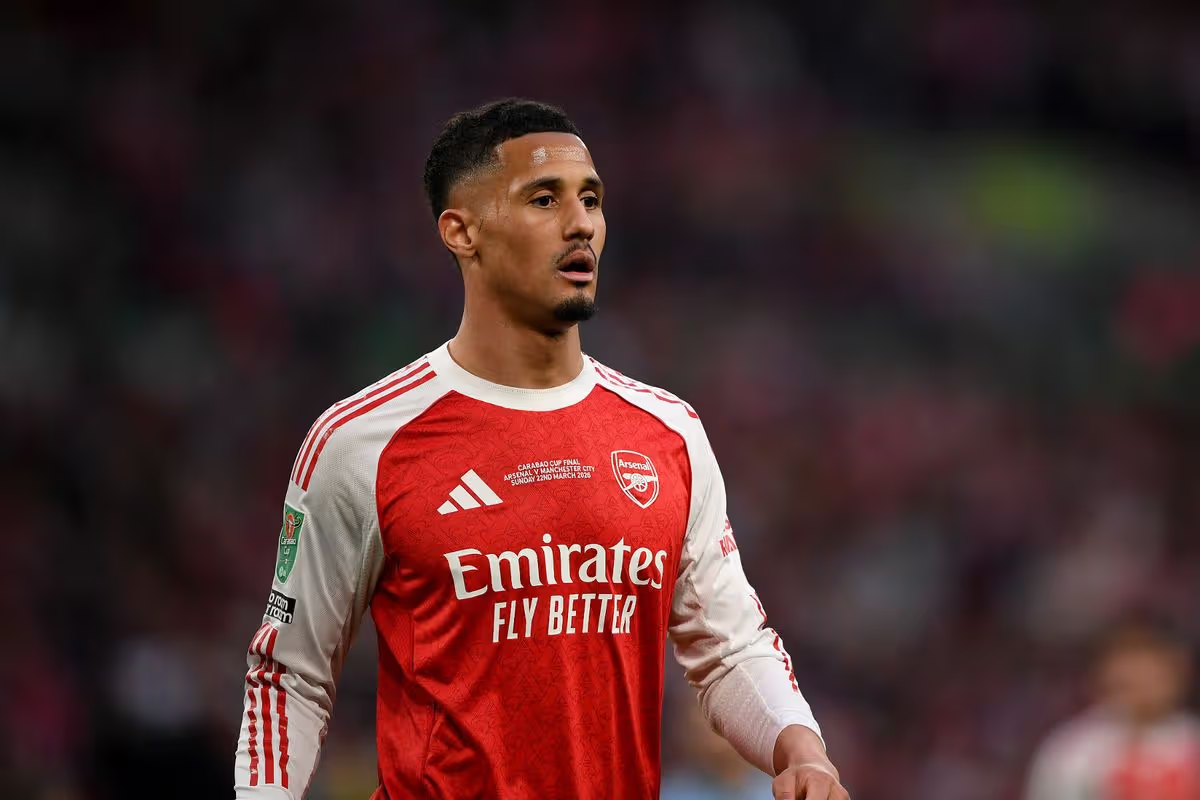
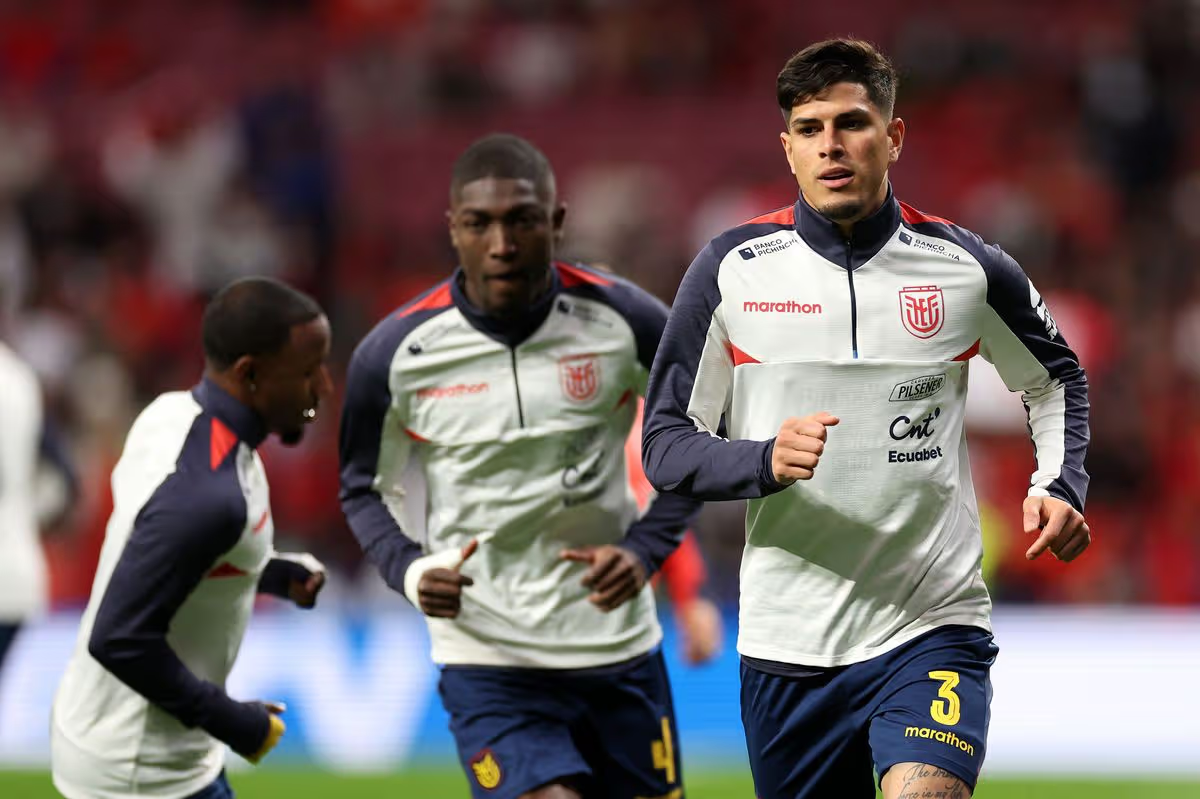
Piero Hincapie, the Ecuadorian defender, lasted until Friday’s draw with Morocco before medical tests prompted his withdrawal ahead of Tuesday’s clash with the Netherlands. Leandro Trossard pulled out of the Belgium squad with a hip complaint. Gabriel Magalhaes is dealing with pain in his right knee, scans having identified a specific injury. William Saliba, who played in the Carabao Cup final only to aggravate an ankle problem, has been given a minimum ten-day rest period by the French Football Federation, and is pencilled in to face Southampton in the FA Cup on 4 April. Jurrien Timber, injured during the win over Everton, did not travel with the Netherlands at all.
Then there are the two whose absences predate this break entirely. Martin Odegaard has been out for roughly a month, his knee ruling him out of the Carabao Cup final, and nobody is yet confident he will be fit for the Southampton tie. Mikel Merino, the versatile midfielder who joined from Real Sociedad with such excitement last summer, was photographed at Wembley on crutches wearing a protective boot. The club are being cautious, and rightly so, but the honest expectation now is that his season is finished. He will be hoping to make Spain’s World Cup squad, which is something, though cold comfort for Arsenal’s immediate needs.

The fixture list waits for no one
What makes all of this so pressing is the schedule that awaits. Arsenal face five matches in 15 days once domestic football resumes, a run that demands a squad operating at close to full strength. Instead, Arteta will be piecing together a team from whoever has come through the break unscathed, rotating aggressively, and trusting the depth of a group that has already shown remarkable resilience this season.
Tuchel, speaking before the break, acknowledged the tension that always exists between club and country at this stage of the campaign. “I know that this window, this camp, is where the clubs play a very crucial time of the season,” he said. “We are very well aware of it but we have also our own goals and our own targets.” He was measured about it, diplomatic in the way experienced international managers tend to be. The sentiment was fair. The timing, for Arsenal, has been brutal.
Eberechi Eze’s situation illustrates the squeeze particularly well. The attacking midfielder hurt his calf during Arsenal’s Champions League win over Bayer Leverkusen earlier this month, missed the Carabao Cup final as a result, and is now expected to be out for four to six weeks. He will almost certainly play no part in that punishing run of fixtures.

For Arteta, it is a test of his management as much as his tactics. He has built something real at Arsenal over the past few seasons, a team that competes on multiple fronts and does so with genuine conviction. But squads are finite, and no amount of tactical ingenuity fully compensates for losing a dozen players to the treatment room simultaneously.
The coming weeks will tell us a great deal about the character of this Arsenal group. It has already shown plenty. Right now, though, the Emirates dressing room must feel less like a title contender and more like a triage ward.


GIPHY App Key not set. Please check settings