
 ekane
ekane

From Italy’s creeping dread to Lewandowski’s possible farewell, the road to this summer’s tournament throws up some genuinely compelling stories
The World Cup play-offs get underway on Thursday, and for sixteen nations, this is where everything either comes together or falls apart. Four places in this summer’s tournament in the United States, Canada and Mexico are still available to European sides, and the teams chasing them range from serial qualifiers to nations who have not been near a World Cup in decades.
The format is straightforward enough. Sixteen teams have been split into four separate paths, each containing four sides. One-legged semi-finals lead into one-legged finals, which means there is no safety net, no second leg to hide behind. One bad evening and you are done.
The Home Nations subplot
There is a particularly intriguing story developing on the British side of the draw. Northern Ireland travel to Bergamo to face Italy, while Wales host Bosnia-Herzegovina at Cardiff City Stadium, and if both home nations win, they will meet each other in the play-off final.
Northern Ireland have not qualified for a World Cup since 1986, when the tournament was last held in Mexico. Manager Michael O’Neill has spoken about the Atalanta ground in Bergamo suiting his side, and there is something to that. A compact, atmospheric club stadium is a rather different proposition from the grandeur of the San Siro or the Stadio Olimpico. Whether his players can do what no Northern Ireland side has managed since 1958, and actually beat Italy, is another matter entirely.
Wales, meanwhile, are looking to reach a second successive World Cup under Craig Bellamy, who has been refreshingly candid about the challenge ahead. He described Bosnia-Herzegovina as “a different beast,” and he is not wrong. Wales have not beaten them in any of their previous four meetings, which makes Cardiff City Stadium feel less like a fortress and more like an open question.
Potter’s Sweden and the weight of expectation
Graham Potter has had a difficult couple of years. His time at Chelsea and then West Ham left him bruised, and there were genuine questions about where his career was heading. So there is a neat symmetry to the fact that his next assignment has brought him back to Sweden, the country where he first built his reputation at Ostersunds FK.
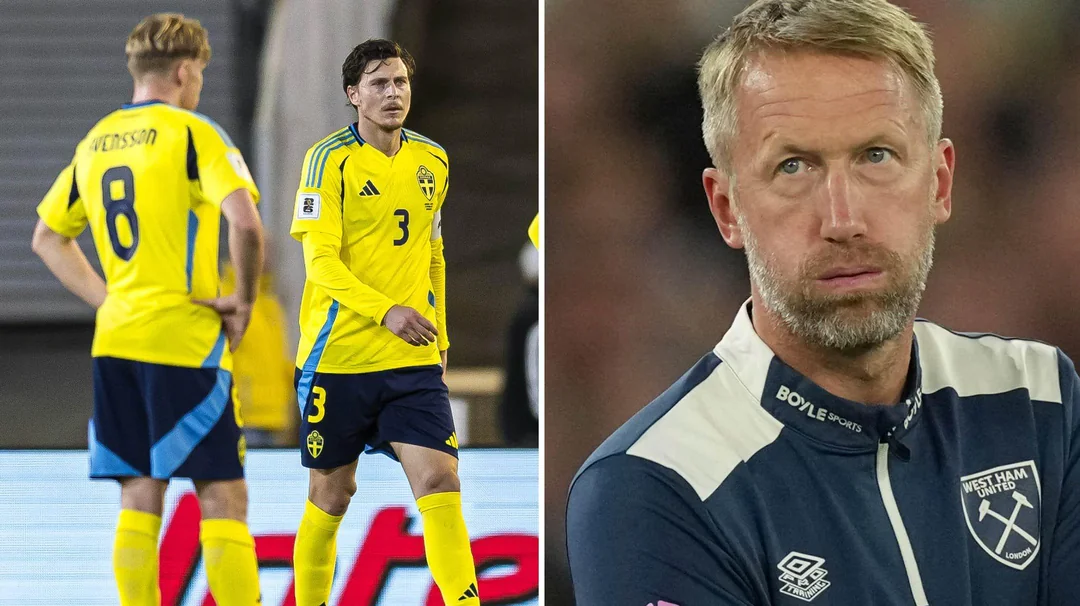
The talent available to him is genuinely exciting. Alexander Isak, Viktor Gyokeres and Anthony Elanga represent the kind of attacking options most managers would envy. The problem is that Sweden finished bottom of their qualifying group and have not won a game since Potter took charge, losing 4-1 to Switzerland and drawing with Slovenia. Results, in other words, have not yet matched the potential.
Isak remains unavailable as he recovers from a broken leg, though Liverpool manager Arne Slot has suggested he could return sometime in late March or early April. Sweden face Ukraine at a neutral venue in Valencia, the match relocated because of the ongoing war, and Potter will know that a positive result here would go some way toward repairing a reputation that took a few knocks in the Premier League.
Italy and the unthinkable
Twelve years. That is how long it has been since Italy last appeared at a World Cup, and the anxiety surrounding Gennaro Gattuso’s side ahead of their meeting with Northern Ireland is entirely understandable given what has happened before.
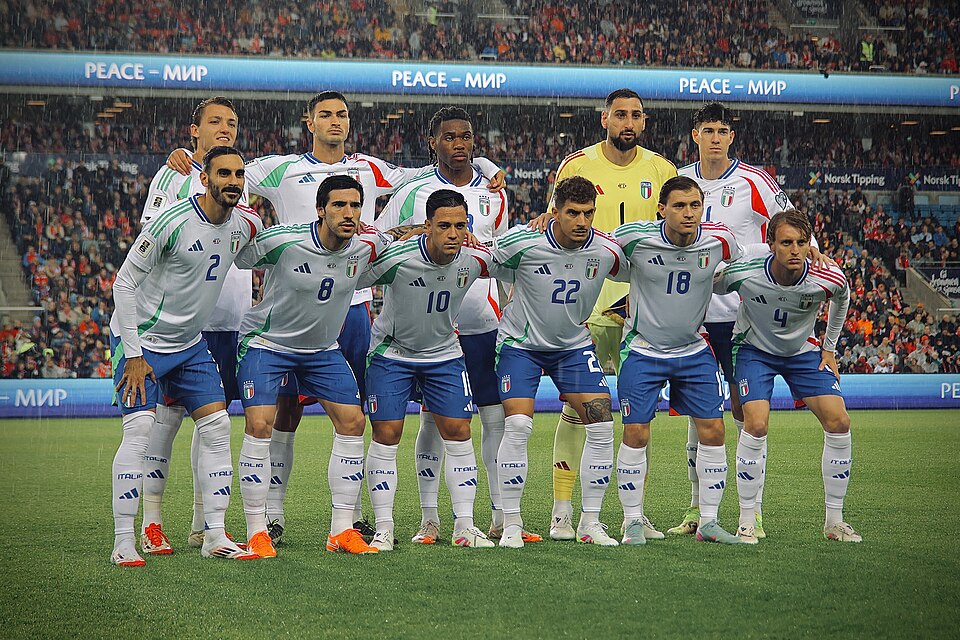
Italian football journalist James Horncastle put it well when he said: “It was called apocalyptic the first time they missed out. I don’t know what stage of the apocalypse we are in now.” That kind of dark humour tends to emerge when a nation has run out of more straightforward ways to process the situation.
Gattuso, the combative former midfielder who won 73 caps and was part of the 2006 World Cup-winning squad, has not hidden his frustration with the system. “In my day, the best runners-up went straight to the World Cup,” he said pointedly. Italy did win six of their final eight qualifying games, so the form is there. But play-offs have a habit of ignoring recent form entirely.
Lewandowski’s last chance
Robert Lewandowski is 37 years old and has played 163 games for Poland. He has scored 88 international goals, which makes him his country’s all-time leading scorer by some distance. And yet, for all that extraordinary output across a long career, he has managed precisely one goal at a World Cup, against Saudi Arabia in Qatar three years ago.

Poland face Albania at home in their semi-final, and Lewandowski will be well aware that this may be his last realistic opportunity to leave a proper mark on the tournament that has, so far, been slightly unkind to him. Poland are unbeaten in six games and start as favourites, though Albania have lost only twice in their past ten outings, both times against England. The winners face either Sweden or Ukraine.
For Lewandowski, every game at this stage carries a particular kind of weight. That tends to focus the mind.




GIPHY App Key not set. Please check settings